10 Hours a Week Back: How Small Businesses Use AI to Scale
Most small business owners already know AI works. The ones who haven't tried it think it's complicated. The ones who have are trying to figure out which tools actually save time and which ones just add another subscription to the pile.
The data from Adobe's 2026 SMB survey tells a clear story: 85% of small businesses are now using generative AI, and 47% are seeing revenue growth averaging 21%. But the number that gets less attention is the time piece — the hours that stop disappearing into administrative work.
That's the part worth looking at directly.
Where the Hours Actually Go
Small business owners don't struggle with one big problem. They struggle with five or six small ones that add up to an eight-hour day that shouldn't take three.
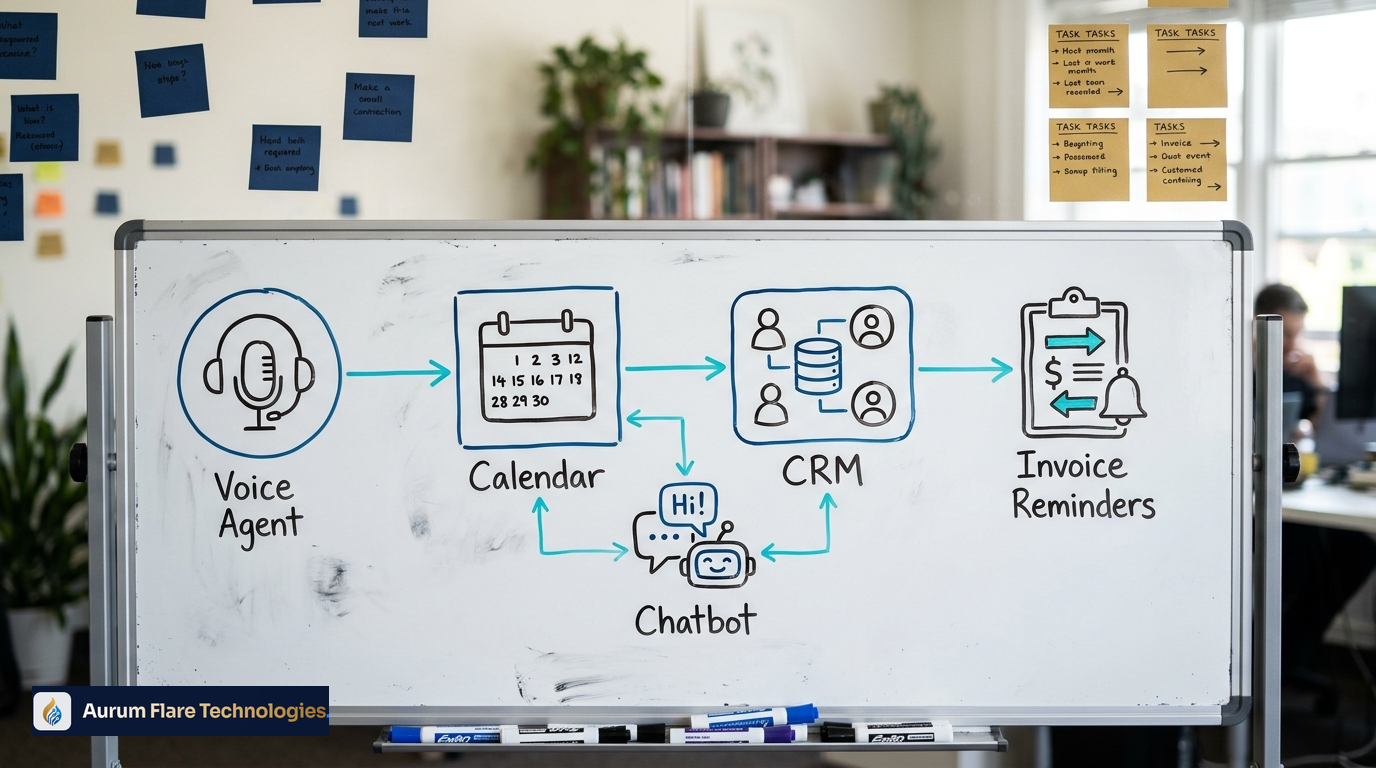
Lead follow-up is usually the biggest leak. Someone texts your business at 6 PM. You see it at 9 PM. By then they've already booked with someone else. AI voice agents and chatbots pick up the inquiry within minutes and start the qualification process. You get a text summary before you're out of bed.
Customer support is the second biggest time sink. The same five questions come in every week — where's my order, can I reschedule, do you offer this. AI chatbots handle these 24/7 and hand off anything complex to a human. Your inbox stops being a triage exercise.
Scheduling alone costs the average service business 3-5 hours a week. Appointment AI that connects to your calendar and handles confirmations and rescheduling cuts that to near zero.
Chasing payment is awkward. But it's also money. AI systems that send automated reminders collect what's overdue without you having to be the bad guy.
After every call or visit, you're supposed to update your CRM. Almost nobody does it consistently — there's never time. AI agents do it automatically, which means your pipeline numbers are actually worth looking at.
The Compound Effect
It's not about saving one hour here or there. When your follow-ups go out in minutes instead of hours, you close more leads. When your appointments get booked without email tag, you fill more slots. When your invoices get followed up automatically, your cash flow steadies. Each of these is worth a few hours a month. Together they compound.
SBE Council's 2026 survey found that the average small business using AI runs a median of five tools in their stack. They're not replacing the human — they're handling the administrative glue that used to eat the entire day.
The business owners who come out ahead in 2026 aren't the ones who worked the most hours. They're the ones who automated the parts that were stealing time from the work that actually matters.
How to Start
Don't try to automate everything at once. Pick the one thing that eats the most time and costs the most money when it slips.
For most service businesses that's lead follow-up. A voice agent that picks up inquiries and starts the qualification conversation is often a two-day setup. Once that's running, measure what changed in your response rate. Then add the next piece.
The stack doesn't have to be built all at once. It has to be built in the right order.
If you want to map out what a 10-hour-week AI stack looks like for your specific business, the team at Aurum Flare can run a free audit and show you exactly where the time leaks are. Book a call at https://www.aurumflare.com/contact/.
The owners who are winning this year are the ones who stopped trying to do everything themselves.
See how AI automation could work for your business
Book a free 30-minute assessment — no pitch, just answers.
Book a Free Assessment