AI Bookkeeping That Costs Less Than a Cup of Coffee Per Day

Most small business owners didn't get into business to do spreadsheets at 11 PM.
Yet here we are. Bookkeeping, invoice chasing, expense categorization, payroll reconciliation — these tasks quietly drain hours that could be spent landing clients, building products, or actually taking a weekend off. According to a 2025 study by a leading small business association, the average solopreneur spends 14 hours a week on administrative finance tasks. That's nearly two full workdays. Every week.
The math gets worse when you look at the cost.
What You're Actually Paying for Manual Finance Work
Let's say you value your time at $75/hour (a conservative number for most service-based businesses once you factor in client revenue). Fourteen hours a week times 52 weeks is 728 hours a year — the equivalent of 18 full work weeks spent on bookkeeping alone.
That's not just time. That's opportunity cost. That's the deal you didn't pitch because you were reconciling last month's receipts. That's the vacation you didn't take because no one else could handle the books while you were gone.
The traditional fix has been to hire a bookkeeper or outsource to a service. That's a real solution — and a real expense. A competent part-time bookkeeper runs $500 to $1,500 a month depending on transaction volume. That's $6,000 to $18,000 a year. For many early-stage businesses, that's the difference between profitable and not.
Where AI Changes the Equation
The past 18 months have brought a meaningful shift in what AI-powered finance tools can actually handle. Tasks that used to require human judgment — categorizing unusual expenses, flagging potential write-offs, matching transactions across multiple accounts — are now being handled automatically with a level of accuracy that rivals mid-level bookkeeping staff.
Here's what that looks like in practice:
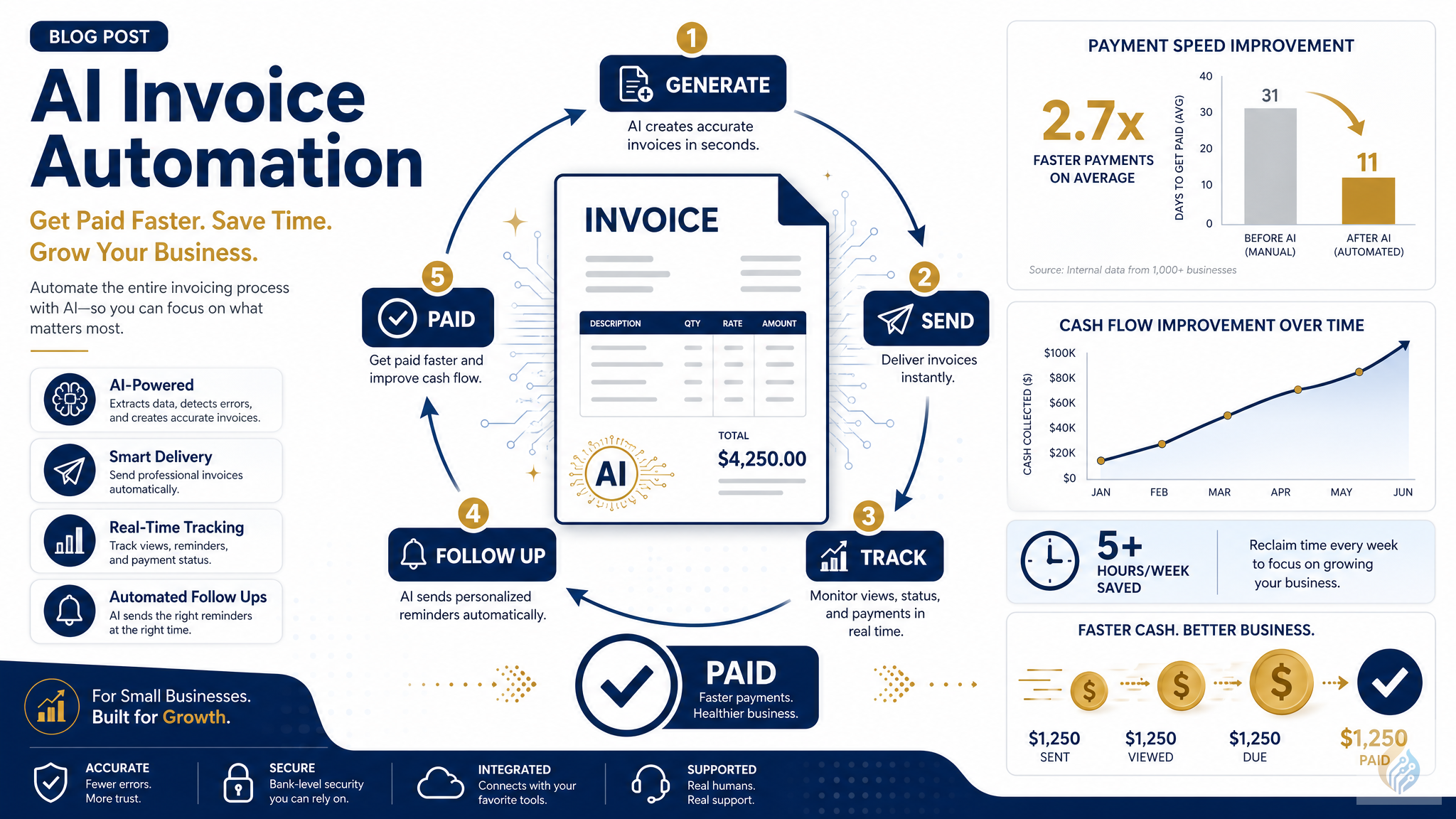
Accounts payable and receivable run on autopilot. Invoices get generated, sent, and followed up on without anyone touching them. Late payments trigger sequences. Healthy cash flow becomes the default, not the goal.
Expense categorization happens at the point of transaction. Receipts get scanned, classified, and logged without a human touch. The IRS categories are already set. The reconciliation happens continuously rather than in a year-end panic.
Financial reporting becomes a real-time dashboard instead of a quarterly event. You know your actual margins, not estimates. You can make pricing decisions in March instead of waiting for the accountant to tell you in April.
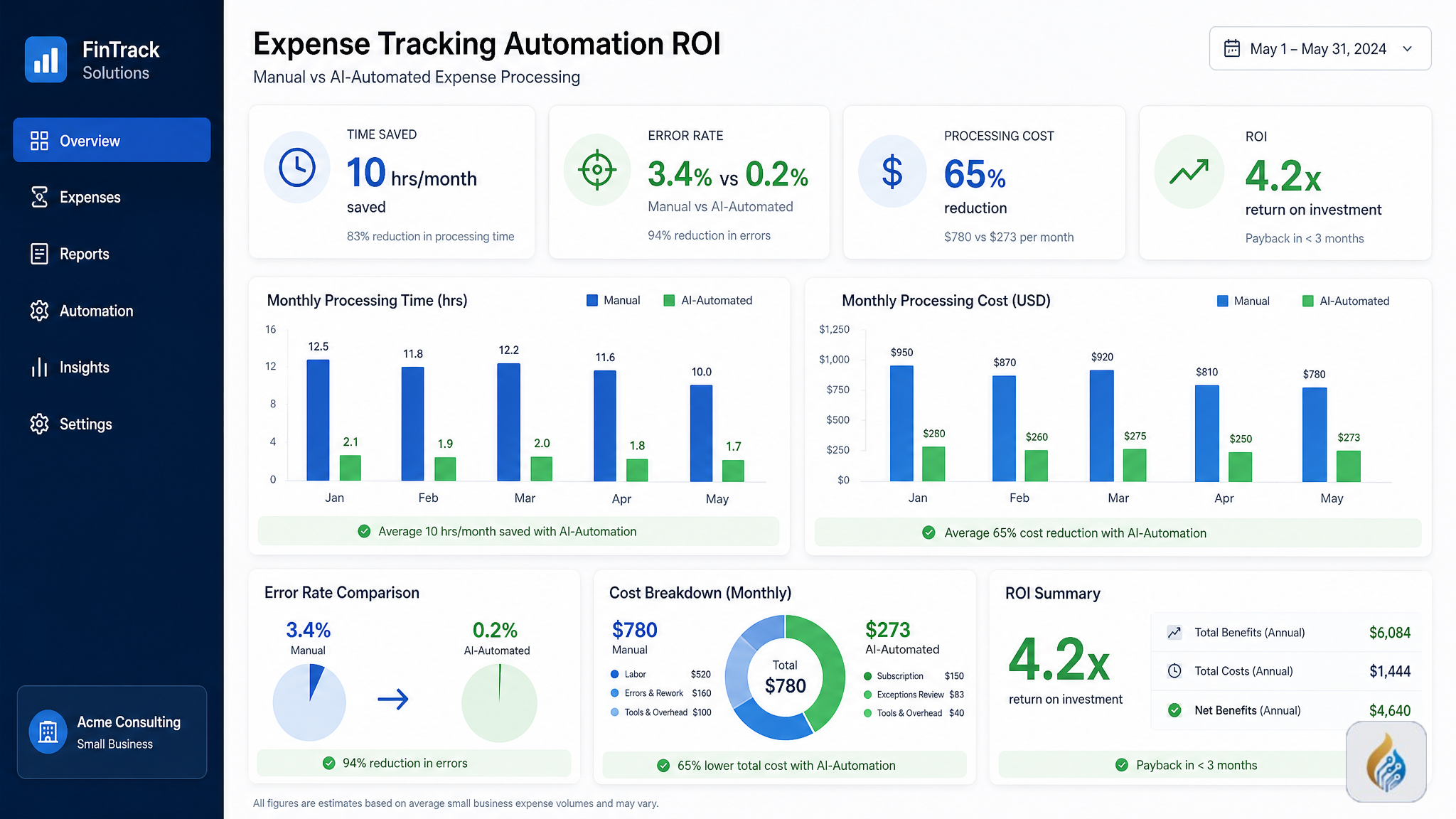
The cost of these systems? For most small businesses, less than $150 a month. Some of the leading platforms are even lower for businesses under a certain transaction threshold. That's less than a tank of gas. Less than a monthly subscription to the software you're already paying for and not using effectively.
The Real ROI Number
Business owners who have made the switch report a consistent pattern: the time savings are real, but the bigger impact is behavioral. When financial oversight stops being a bottleneck, other parts of the business start moving faster.
One plumbing contractor we worked with described it simply: "I used to avoid looking at my books because it was overwhelming. Now I check them every morning with my coffee. I caught an vendor overcharge in week two — that alone paid for the system for the next three years."
That anecdote illustrates something the numbers bear out: the ROI isn't just in labor hours saved. It's in the errors caught, the cash flow improved, the decisions made faster and with better information.
For a business doing $500,000 in annual revenue, even a 2% improvement in cash flow visibility and reduction in finance-related expenses translates to $10,000 to $25,000 annually. The AI system costs a fraction of that.
What's Actually Holding Businesses Back
If the ROI is so clear, why haven't more small businesses made the switch?
Three reasons come up consistently:
Trust. Handing over your finances to an automated system feels risky. This is understandable — and addressable. The key is starting with a system that integrates with your existing bank accounts and accounting software, so nothing happens without your visibility and approval. AI handles the processing. You still own the decisions.
Complexity perception. Business owners assume the setup is going to be a months-long project. In reality, most modern AI finance platforms connect to your existing accounts and are operational within a day. The migration from manual processes is the longer part — typically 4 to 8 weeks — but that's about historical data, not system configuration.
Fear of the unknown. What if it makes a mistake? It will — occasionally, like any system. That's why human oversight remains part of the workflow. But the error rate on routine transactions is lower than manual processing, and the system gets better over time.
The Bottom Line
Your time is the most valuable resource you have. Every hour spent on tasks that can be automated is an hour not spent on the work that actually grows your business.
AI-powered finance automation isn't a futuristic concept. It's a present-day tool that small businesses are using right now to reclaim their evenings, improve their margins, and make better decisions with real numbers instead of guesswork.
The cost is low. The setup is fast. The ROI is immediate.
Ready to put this to work in your business? Book a free discovery call with Aurum Flare Technologies at https://aurumflare.com/contact.
See how AI automation could work for your business
Book a free 30-minute assessment — no pitch, just answers.
Book a Free Assessment