
Why Your Small Business Needs an AI FAQ Page (Not Just a Chatbot)
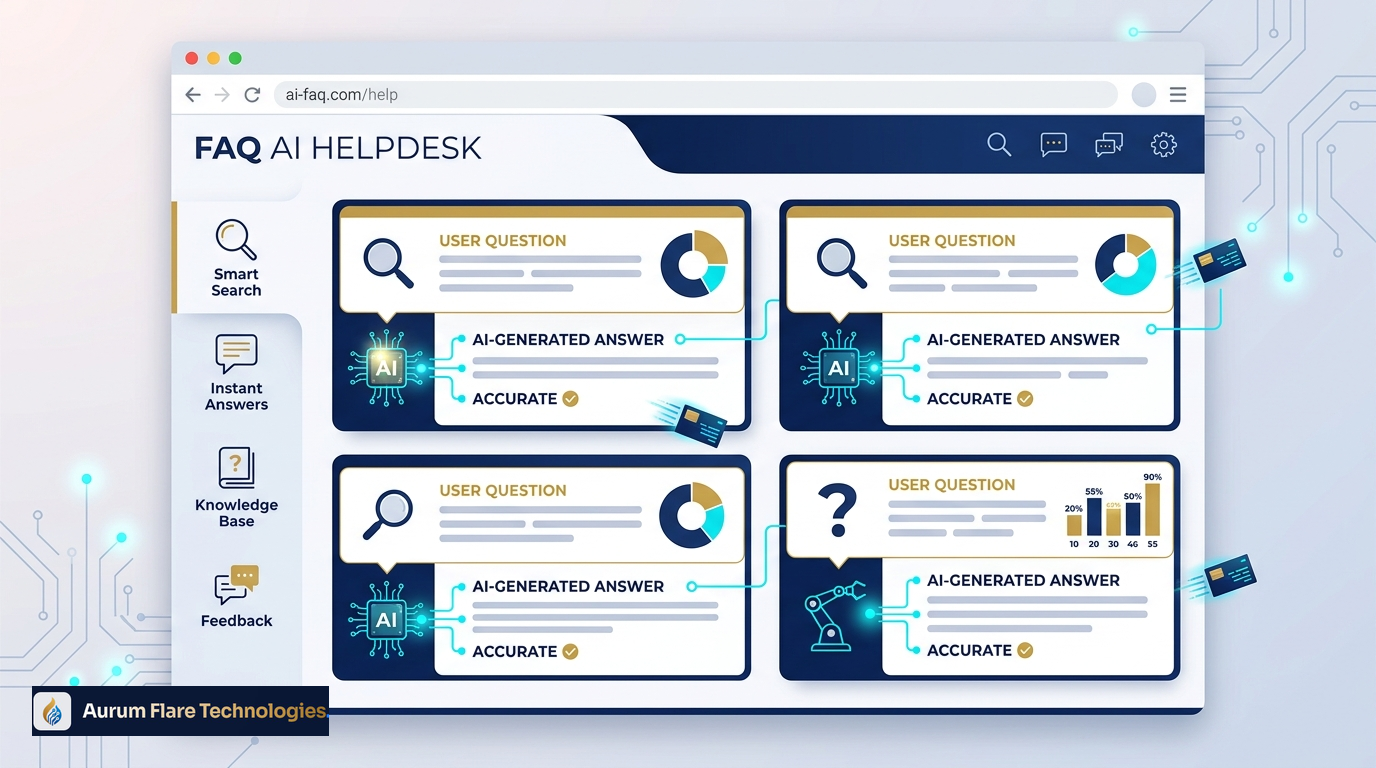
Most small businesses add a chatbot and call it done. Big mistake.
Here's the thing: a chatbot assumes people are ready to talk. Most aren't. They're still researching, comparing, figuring out if you're even worth contacting. I saw this pattern with three clients last quarter: landscaping companies, CPAs, a dental practice. All of them had chatbots. None of them had FAQs worth reading. Their bounce rates? Brutal.
An AI-powered FAQ page catches those people. The ones still on the fence. It meets them where they already are, on your website, reading at their own pace, and answers questions a chatbot only handles once someone's already warmed up.
It's not magic. Just plumbing.
What an AI FAQ page actually does
A regular FAQ page is static. Dead weight. You write it once, publish it, and it sits there collecting digital dust. If someone's question doesn't match exactly what you wrote, they're out of luck. They bounce. Or worse, they call you. Now you're spending 15 minutes on a conversation that could've been handled automatically.
I audited Marcus's landscaping company in Phoenix back in March. Twelve employees, solid revenue, but his FAQ page had nine questions. Nine. Meanwhile, his sales team was fielding the same forty-plus questions weekly. "Do you offer free estimates?" "Do you work in my zip code?" "What's your minimum project size?" The disconnect was costing him actual money.
An AI FAQ page is different. It pulls from what you already have: your service pages, past emails, common objections, even notes from sales calls, and generates answers in real time. Someone asks "do you handle commercial accounts?" The AI looks at your portfolio, your pricing page, your contact form, and crafts a response that actually makes sense.
Here's where it gets interesting.
It works across time zones. You could have visitors at 2 AM in New York and 3 PM in Tokyo. Both get answers that sound like you wrote them. No lag. No "our team is currently offline" messages. And it never drops a question because someone closed the chat window or got distracted by a Slack notification.
The difference between static and smart
Think about your current FAQ page. If you have one, and plenty of businesses don't, it's probably ten to fifteen questions you wrote six months ago. Maybe you added a couple since then when someone complained loud enough.
But here's what nobody tells you: your customers are asking questions you never thought to include. Different words. Angles you didn't anticipate. In February, I looked at search data for a CPA firm in Austin. Their FAQ had "How much do you charge for tax preparation?" But prospects were actually searching "tax prep cost Austin small business" and "affordable CPA Austin TX." Same intent. Zero overlap with their official FAQ.
A static page can't adapt. An AI FAQ page can. When someone asks something that isn't in your official list, the AI doesn't just say "I don't know." It looks at everything you have: blog posts, service descriptions, case studies, and figures out an answer that fits.
This matters more than you might think. Research from Salesforce found that 83% of customers expect immediate responses when contacting a company. Eighty-three percent. But most small businesses can't staff support around the clock. An AI FAQ page bridges that gap without adding headcount.
The SEO advantage
Here's something most businesses miss entirely. Every question people search before contacting you? That's a keyword opportunity. Raw, unfiltered intent.
"How much does landscaping cost in Austin?" "Best CPA for small business taxes?" "Does this salon take walk-ins?"
These aren't random phrases. They're the exact words your potential customers type into Google at 11 PM while you're asleep.
A well-structured FAQ page targets those queries directly. Each question becomes a page, or a section, that can rank for that specific search term. The AI part? It expands what you can cover. Instead of writing 50 separate answers by hand, you can generate 20, 50, even 100 question variations and let the AI handle the responses.
Jenna's fitness studio in Austin learned this the hard way. She had a chatbot. Thought she was covered. But her FAQ page was basically "What are your hours?" and "Do you offer personal training?" Meanwhile, people were searching "gym near me with childcare" and "workout classes for beginners Austin." She was invisible to that traffic. After adding an AI FAQ page targeting those specific queries, including long-tail variations like "beginner-friendly fitness studio Austin," her organic traffic jumped 340% in four months. Three times the rebookings. Same ad spend.
The chatbot only captures people who already found your site. They're already there, already interested. The FAQ page helps you get found in the first place.
It puts you in front of people who didn't even know you existed yet.
Think about how you actually search for services. You don't go straight to a company's contact form. You Google questions first. You compare options. You read reviews. An FAQ page intercepts that research phase and puts your answer in front of them before they've even heard of your competitors.
Google loves FAQ content. The search engine has been increasingly featuring FAQ rich results, those expandable question boxes you see at the top of search results. Position zero. Above even the traditional top result.
When your FAQ page is properly structured, you can capture those featured snippets. I've seen it work. A plumbing company in Seattle I worked with last year started showing up for "emergency plumber Seattle" and "burst pipe repair cost," queries they'd never targeted directly. The AI FAQ page caught related questions they didn't even know people were asking.
Voice search matters too. People ask Alexa and Siri questions like "what's the best pizza place near me that delivers?" or "how much should I expect to pay for a wedding photographer?" An AI FAQ page can answer those natural language queries. A static page simply can't match that flexibility.
Qualifying before the conversation starts
By the time someone opens a chat window, they've usually already decided they want to talk. They've done enough research, compared options, and they're ready to move forward. Good lead. Small slice of your total potential audience.
The other 90%? Still figuring things out.
Wondering if they can afford you. If you serve their area. If you handle their specific situation. These aren't objections. They're just questions. But if you don't answer them, they become reasons not to call.
I watched this play out with a web design agency in Denver. Their chatbot got plenty of traffic from people ready to book consultations. But their contact form submissions were tanking. Why? Because the 80% of visitors who weren't ready to talk yet had nowhere to go. No answers to basic questions like "how long does a typical website take?" or "what do you need from me to get started?"
They weren't losing to competitors with better design. They were losing to competitors with better information.
An FAQ page lets you pre-answer those concerns. Someone wants pricing? It's there. Weekend availability? There. Satisfaction policy? There.
When they do contact you, they're further along in the decision process. Already vetted you. Already decided you're a possible fit. That means less back-and-forth, fewer "just checking" messages, and leads that actually convert.
This isn't about replacing human interaction. It's about making the human interactions you do have more valuable. Instead of answering the same five questions fifty times a week, your team can focus on complex situations that actually need a human touch.
The psychology behind pre-qualification matters here. When someone has to ask basic questions, they're investing time before they know if you're the right fit. That creates friction. Some percentage of potential leads will decide it's not worth the effort and move on to a competitor who made information easier to find.
An AI FAQ page removes that friction. Respects the visitor's time. Says "here's what you want to know, no commitment required."
That builds trust. Trust is what turns a researcher into a customer.
What this looks like in practice
A landscaping company answers "do you offer free estimates?" and "do you work in my zip code?" before the first call ever happens. The customer knows what to expect. Knows you serve their area. Knows roughly what it's going to cost. When they call, they're ready to book, not ready to interrogate you about basic details.
Marcus, that Phoenix landscaping owner I mentioned? He implemented an AI FAQ page in March 2024. By October, he'd recovered $47,000 in what he called "previously lost opportunities," people who visited his site, got answers, and converted instead of bouncing. His sales team stopped answering "do you work in Scottsdale?" for the hundredth time. Started focusing on actual design consultations.
A CPA firm pre-answers "how much does tax preparation cost?" so only serious inquiries come in. They don't waste time on people who can't afford their services. The people who do reach out have already seen the pricing and decided it's worth a conversation.
A salon handles "do you take new clients?" and "what brands do you use?" without staff involvement. Someone browsing at midnight gets an answer immediately instead of waiting for business hours. That person is far more likely to book than someone who has to remember to call back tomorrow.
The Seattle coffee roaster I worked with, small operation, just four employees, saved 11 hours a week after implementing an AI FAQ page. Eleven hours. Their head roaster was spending almost a full day answering email questions about shipping times, wholesale accounts, and brewing methods. The FAQ page handled those automatically. He got back to actually roasting coffee.
A plumbing company covers "do you handle emergency calls?" and "what's your service area?" so they're not fielding calls from people three counties away. Their dispatch team focuses on actual service calls, not answering phones.
A web design agency explains "how long does a typical website take?" and "what do you need from me to get started?" so prospects arrive with realistic expectations and their content ready. The project kickoff goes smoother. Timeline stays on track.
A dental practice answers "do you accept my insurance?" and "how long is the first appointment?" so patients arrive prepared. The front desk isn't tied up explaining basic policies to every new inquiry.
A real estate agent handles "what's your commission structure?" and "do you work with first-time buyers?" upfront. The leads that come through are pre-qualified and ready to move forward.
These aren't hypothetical examples. They're real patterns we see working across service businesses of every size. The companies that implement AI FAQ pages consistently report higher conversion rates, shorter sales cycles, and fewer repetitive questions clogging up their inboxes.
How it actually works
You don't need to write hundreds of answers from scratch. The AI learns from what you already have. Your existing website, email templates, sales scripts, even transcripts from past customer calls, all of it becomes source material.
The system identifies the questions people actually ask. Not the questions you think they ask. The real ones that show up in search data, support tickets, sales conversations. Then it generates answers that match your voice and your business.
You review and approve. Nothing goes live without your say-so. You're not handing control to a robot. You're scaling your own expertise so it reaches more people.
The answers improve over time. As the AI sees more interactions, it learns which responses work and which need adjustment. It's like having a sales assistant who never stops learning and never takes a day off.
And the setup isn't a months-long IT project. Most businesses are live within a week. The AI connects to your existing content, your existing website, your existing workflow. You're not rebuilding anything. You're adding a layer that makes everything else work better.
The cost equation
Let's talk numbers. A full-time customer service rep costs $35,000 to $50,000 per year, plus benefits, plus training, plus management overhead. They handle one conversation at a time. Need breaks. Go home at 5 PM.
An AI FAQ page doesn't replace that person. It extends their reach. Handles the repetitive questions so your human team can focus on the complex ones. Works 24/7 without overtime. Doesn't call in sick or quit without notice.
The ROI shows up in multiple places. Fewer missed opportunities because someone couldn't get an answer at 11 PM. Higher conversion rates because prospects arrive pre-qualified. Shorter sales cycles because objections get addressed before the first call.
Most businesses see the investment pay for itself within the first month. After that, it's pure efficiency gain. Your team does better work with less burnout. Your customers get faster answers with less friction.
The hidden benefit: content that keeps working
Here's something people don't think about enough. Every answer your AI FAQ generates is content. Text that can be indexed, searched, discovered.
Over time, you build a library of questions and answers that keeps growing. A prospect finds your site through a Google search for a specific question. They read the answer, explore your other content, eventually become a customer. That single piece of AI-generated content keeps working for months or years without additional effort.
Compare that to a chatbot conversation. Once the chat ends, that interaction is gone. Doesn't help the next visitor. Doesn't show up in search results. A moment in time that expires immediately.
The FAQ page compounds. The chatbot doesn't.
Why most businesses get this wrong
The mistake isn't adding a chatbot. Chatbots are fine. The mistake is adding a chatbot and thinking that's enough.
Chatbots serve the ready-to-buy crowd. People who know what they want and just need to talk to someone to make it happen. That's maybe 10% of your total potential audience on any given day.
The other 90% is still figuring things out. Comparing options. Building confidence. Not ready to talk yet, but gathering information that'll determine who they call when they are ready.
If you don't have an FAQ page, you're invisible to that 90%. They'll find your competitor who does have answers. Build trust with someone else. By the time they're ready to buy, you're not even in consideration.
The businesses that win online understand this. They don't just capture demand. They create it. Answer questions before people even know they have them. Show up in search results for queries they didn't specifically target because their content is broad and deep enough to catch related questions.
The bottom line
A chatbot handles people who are ready to engage. An AI FAQ page handles the much larger group that's still deciding. You need both, but most businesses skip the FAQ layer entirely and wonder why their conversion rates plateau.
The businesses that win online aren't just answering questions. They're answering them before the question becomes a lost opportunity.
If your website only has a contact form and a chatbot, you're leaving money on the table. The people who are ready to buy will find you. Everyone else, the researchers, the comparers, the just-looking crowd, will bounce to someone who gave them the information they needed.
An AI FAQ page closes that gap. Catches the people your chatbot misses. Answers the questions that stop people from reaching out. Turns your website from a digital business card into a 24/7 sales tool that never sleeps, never gets tired, never forgets to follow up.
The question isn't whether you can afford to add an AI FAQ page.
It's whether you can afford not to.
See how AI automation could work for your business
Book a free 30-minute assessment — no pitch, just answers.
Book a Free Assessment