AI Hiring: Screen 200 Resumes in 20 Minutes, Not 2 Weeks
You posted the job. Three days later, you have 214 applications. You have a business to run, so you tell yourself you'll review them this weekend. That weekend becomes next weekend. Meanwhile, your best candidates are accepting offers elsewhere.
This is the hiring trap — and it costs small businesses more than time.
The Real Cost of a Single Hire
A single hiring cycle for a small business owner averages 40 to 60 hours. Writing the posting. Screening resumes. Scheduling interviews. Following up. Checking references. That's one to two full work weeks dedicated to hiring — time taken from serving clients, closing deals, or actually growing the business.
The cost isn't just hours. It's opportunity. Every day a position stays open, revenue doesn't get generated. Every hour spent scanning resumes at midnight is an hour not spent on strategy. And the longer you wait, the more likely your strongest candidates disappear.
Small businesses can't afford slow hiring. But manual hiring is slow by definition.
What AI Screening Actually Does
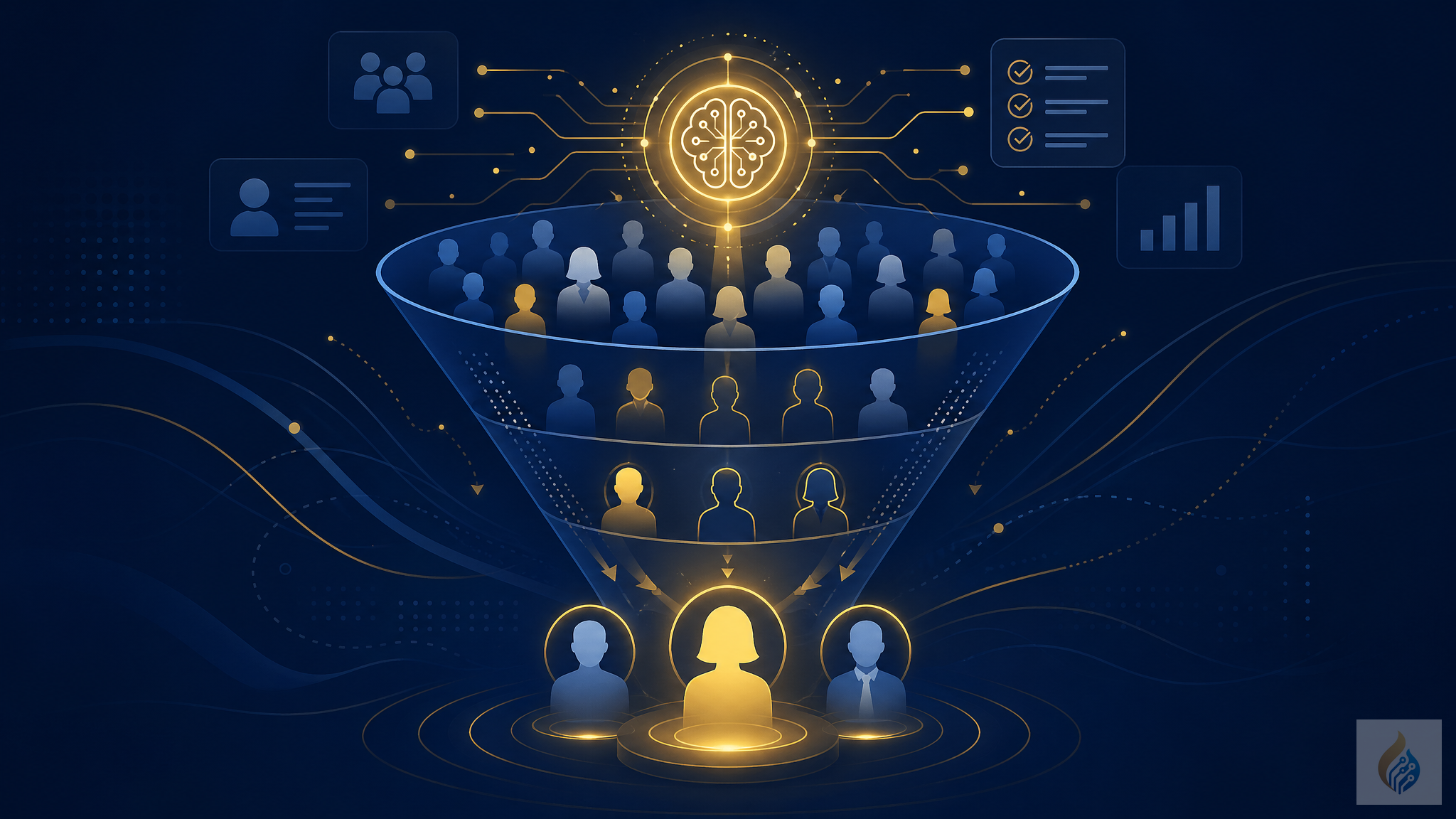
AI-powered recruiting platforms read every single resume — not a skim, not a keyword filter, but a thorough evaluation against your specific job requirements. They score candidates on relevant experience, skills alignment, and contextual fit. Then they surface the top 5 to 10 for your review.
This isn't about replacing judgment. It's about eliminating the 190 resumes that don't match so you can focus on the 10 that might. Instead of scanning 200 applications at midnight, you wake up to a curated shortlist. You still make the call. You just make it faster, with better information.
The screening happens in minutes. Not over the course of a week squeezed between client calls.
Scheduling Without the Ping-Pong
Once you've identified your shortlist, the next bottleneck is coordination. "Are you available Thursday at 2?" "I can do Friday morning." "That works — wait, can we push to 3?" This back-and-forth is one of the most cited frustrations in small business hiring.
AI handles it. Automated scheduling syncs with your calendar, proposes times to candidates, sends confirmations and reminders, and reschedules automatically when conflicts arise. No email chains. No no-shows because someone forgot. Just confirmed interviews on your calendar.
This alone saves 5 to 8 hours per hire. Multiply that across multiple open positions and the hours compound fast.
What This Replaces — and What It Doesn't
AI recruiting automation takes over the parts that drain time without requiring judgment:
- Resume screening and candidate scoring - Interview scheduling and coordination - Follow-up communications and reminders - Initial candidate outreach and response management
What it doesn't replace is where human judgment matters most. Final interviews. Culture-fit assessment. Offer negotiation. The conversations where you're deciding if this person is someone you want to work with every day.
The system handles the volume. You handle the decision.
The ROI Is Not Close
Here's the math: A typical small business hire requires 40 to 60 hours of owner time. AI recruiting automation cuts that to 15 to 25 hours — the focused hours spent on actual interviews and decisions, not scheduling and sorting.
That's 30 to 40 hours saved per hire. At a conservative $75/hour value, that's $2,250 to $3,000 recovered per position. Hire three people this year? You've saved $6,750 to $9,000 in owner time alone.
Then there's time-to-hire. Faster screening means stronger candidates don't slip away. Faster scheduling means interviews happen days sooner. For revenue-generating roles, every week of vacancy costs real money. A position that stays open for six weeks instead of three isn't just inconvenient — it's expensive.
Hiring Is Supposed to Be About Finding the Right Person
Not about finding the time to read 200 resumes.
Small businesses that adopt AI recruiting workflows don't hire differently — they hire faster. They still interview. They still decide. They just stop losing the best candidates to delay and stop burning their own hours on work that doesn't require their judgment.
If you're spending your weekends on hiring instead of your weekdays on growth, something in the process needs to change. Not the people. The system.
[Aurumflare builds AI recruiting workflows that screen, score, and schedule so you can focus on the candidates worth meeting.](https://aurumflare.com/contact)
See how AI automation could work for your business
Book a free 30-minute assessment — no pitch, just answers.
Book a Free Assessment