AI Inventory Management: Stop Losing Money on Your Shelves

65% Accuracy Is Costing You More Than You Think
Here's a number that should keep you up at night: The average small retailer only has about 65% inventory accuracy. That means for every 100 items on your books, roughly 35 are wrong — misplaced, miscounted, or missing entirely.
You feel it every day. A customer asks for something your system says is in stock. It isn't. You reorder something that's been sitting in the back for three months. You write off dead stock at the end of the quarter and wonder where the cash went.
Poor inventory management costs retailers roughly 4% of annual sales. If you're doing $500K a year, that's $20,000 walking out the door — not in dramatic losses, but in a slow bleed of stockouts, over-orders, and markdowns.
What AI Inventory Management Actually Does
The shift from spreadsheets and clipboard counts to AI inventory management isn't just an upgrade — it's a completely different way of thinking about your stock.
Real-time tracking means you know what's on hand across every channel — in-store, online, and warehouse — right now. Not what the spreadsheet said on Tuesday. Now.
Demand forecasting looks at your sales patterns, seasonality, and trends to tell you what you'll need next month — before the rush hits. No more ordering winter coats in March or running out of holiday stock in November.
Automatic reorder triggers kick in when stock hits a threshold you define. No more "I forgot to reorder" moments. The system handles it.
And dead stock identification flags items that haven't moved so you can discount, bundle, or clear them before they become write-offs. That's cash sitting on shelves earning nothing — and we'll find it and free it up.
The Dead Stock Drain
Dead stock is one of those problems that hides in plain sight. It doesn't show up on a P&L with a red flag. It just sits there — on shelves, in backrooms, in storage units — quietly tying up capital that should be working for you.
If 15–20% of your inventory hasn't moved in 90 days, that's not just a storage problem. That's 15–20% of your purchasing budget locked in products that aren't generating revenue. Every dollar in dead stock is a dollar you can't invest in best-sellers, marketing, or growth.
AI inventory systems flag slow-moving items early — before they become write-offs. They show you turnover rates by product, by category, by season. So you can make smart decisions: Discount, bundle, or discontinue. Whatever recovers the most cash.
The Math Makes the Case
Let's run the numbers. If poor inventory control costs you 4% of sales and you're doing $500K/year, that's $20,000 lost annually. At $1M, it's $40,000.
Now factor in recovery. Reducing stockouts by even half means more sales captured — customers find what they want, when they want it. Cutting dead stock by 30% means thousands freed up for reinvestment. And the time you save not manually counting, reconciling, and second-guessing your inventory? That's hours back every week to focus on actually growing the business.
The investment pays for itself within weeks for most small retailers. Not in theoretical savings — in dollars you can track on your bottom line.
We Set It up, We Keep It Running
You don't need to evaluate platforms, configure integrations, or figure out demand algorithms. That's our job.
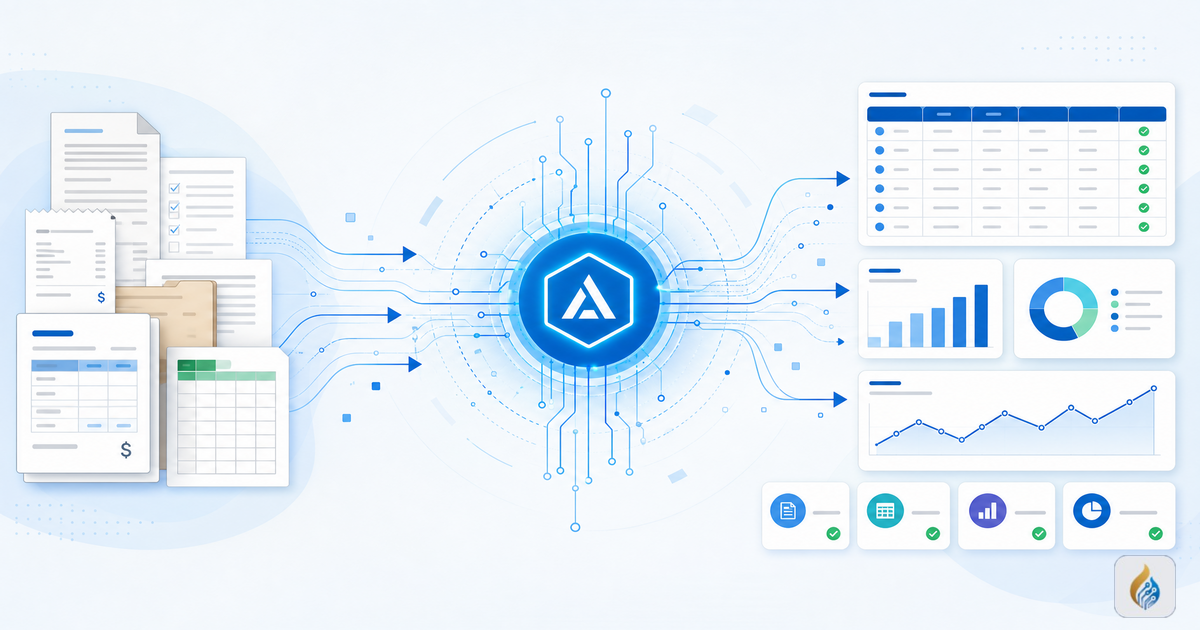
Aurumflare builds and manages AI inventory systems for you. We connect your point of sale, online store, and warehouse into a single real-time view. We set up the reorder triggers, tune the demand forecasts, and monitor the system so it keeps getting smarter. You see what's in stock, what's running low, and what's not moving — all in one place.
No configuration headaches. No "tool comparison" phase. Just a system that works, from day one.
Stop guessing what's on your shelves. We'll set up AI inventory tracking that keeps your stock — and your cash — where it belongs. [Get started at aurumflare.com/contact](https://aurumflare.com/contact)
---
Image prompt: Photorealistic scene of a small retail store backroom with neatly organized shelves of inventory products, a tablet resting on a shelf displaying a clean inventory dashboard with stock level bars and reorder alerts in blue and cyan accent colors. Warm practical lighting, boxes and products arranged on metal shelving. A small business owner checking the tablet. No futuristic robots, no sci-fi elements.
See how AI automation could work for your business
Book a free 30-minute assessment — no pitch, just answers.
Book a Free Assessment