AI CRM Pipeline: Your Sales List That Tells You Who to Call Next
Your CRM is lying to you.
Not intentionally — it's just sitting there, collecting contacts like a digital Rolodex, doing absolutely nothing with them. You enter leads, you log calls, you note deal stages… and then you still have to remember who to follow up with on your own. That's not a sales pipeline. That's a glorified address book.
The average small business owner spends over five hours a week managing their pipeline manually. Sorting through contacts, guessing who's warm, writing follow-ups from scratch, and trying to remember where they left off with that prospect from Tuesday. Five hours of cognitive overhead that could be selling time.
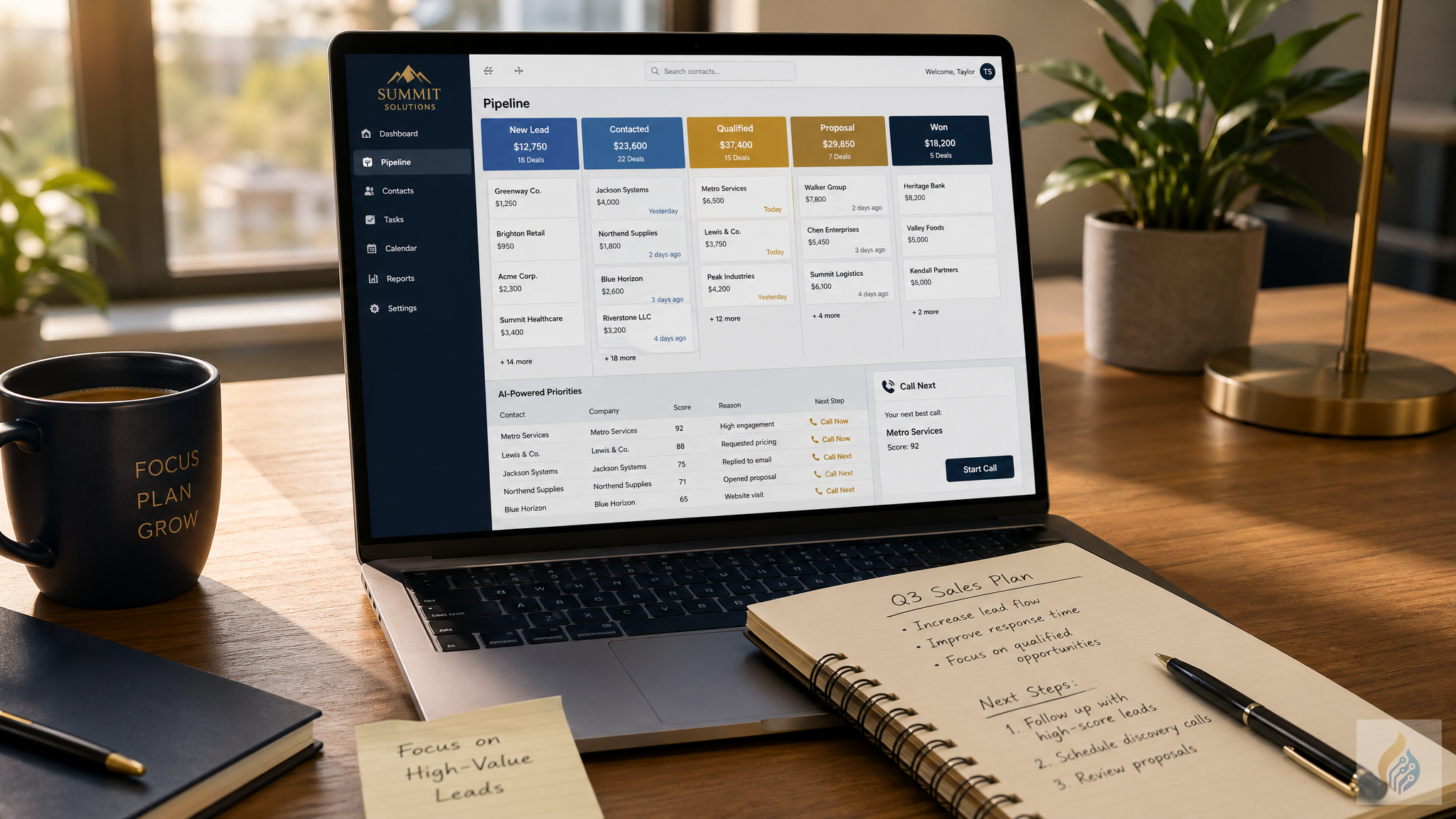
AI-powered CRM pipelines change the math entirely. Instead of asking "who should I call today?" you get a ranked list of the leads most likely to close this week — with a suggested opener for each one.
The Passive CRM Problem
Here's what most small businesses experience: A CRM that captures data but doesn't act on it. Contacts get entered. Deal stages get updated. Notes accumulate. And then? Nothing.
The owner still has to manually scan their pipeline, rely on memory for follow-up timing, and guess which leads deserve attention. Sticky notes multiply. That "I should follow up with…" thought hits at 11pm when you're already exhausted. Deals fall through the cracks — not because you don't care, but because your CRM isn't doing the one thing you need it to do: Tell you what to do next.
This isn't a technology problem. It's an architecture problem. A CRM that stores information without surfacing intelligence is just a database with a nicer UI.
How AI Pipeline Management Actually Works
An AI-powered CRM pipeline doesn't just hold your data — it reads it. Every email open, every site visit, every response pattern becomes a signal. The system scores leads automatically based on engagement behavior, not gut feeling. It prioritizes your daily call list so you start every morning knowing exactly where your time goes.
It also drafts personalized follow-up messages based on context — not generic templates, but messages that reference the specific conversation thread, the lead's industry, and where they are in the decision cycle. You review, tweak if you want, and send. What used to take 20 minutes per follow-up now takes two.
The result: Instead of spreading your attention across 40 stale contacts, you focus on the three who are actually ready to buy this week.
From Guesswork to Data-Driven Selling
Most small business owners operate on intuition when it comes to pipeline management. "I think they're interested" or "they seemed warm last week" isn't a strategy — it's hope.
AI pipeline systems replace that hope with signal. Lead scoring models track engagement intensity over time. A prospect who opened your last two emails, visited your pricing page twice, and replied within 24 hours gets a high priority score. A contact who hasn't responded in three weeks drops down the list automatically.
Small businesses using AI-prioritized outreach see close rates improve 20–30%. Not because they're working harder — because they're working the right leads at the right time with the right message. That's the difference between calling 20 people blindly and calling 5 people who are ready to talk.
What This Replaces (and What It Doesn't)
AI pipeline management replaces the stuff that drains your day: Manual lead scoring, sticky-note to-do lists, the mental load of tracking who needs attention, and the follow-up emails you write from scratch at 10pm.
It does not replace you. Relationship building, negotiation, reading the room on a call, and actually closing deals — that's still your superpower. The AI just makes sure you're walking into the right conversations with the right context.
Think of it as a co-pilot, not an autopilot. It handles the navigation so you can focus on the landing.
The ROI Is Not Subtle
Higher close rates. Shorter sales cycles. Five or more hours every week reclaimed from pipeline management. And here's the kicker: If you close just one extra deal per month from better-timed, better-informed follow-ups, the system pays for itself many times over.
For a small business closing $5K deals, one extra close per month is $60K a year. For $10K deals, it's $120K. The math isn't aspirational — it's what happens when you stop guessing and start prioritizing with data.
Your CRM should work harder than you do on pipeline management. Right now, it probably doesn't. That's fixable — and the fix pays for itself.
Ready for a CRM that tells you who to call and what to say? [Aurumflare builds AI-powered sales pipelines.](https://aurumflare.com/contact)
See how AI automation could work for your business
Book a free 30-minute assessment — no pitch, just answers.
Book a Free Assessment