AI receptionist for real estate agents: how a 'done-for-you' answering service books showings while you sleep
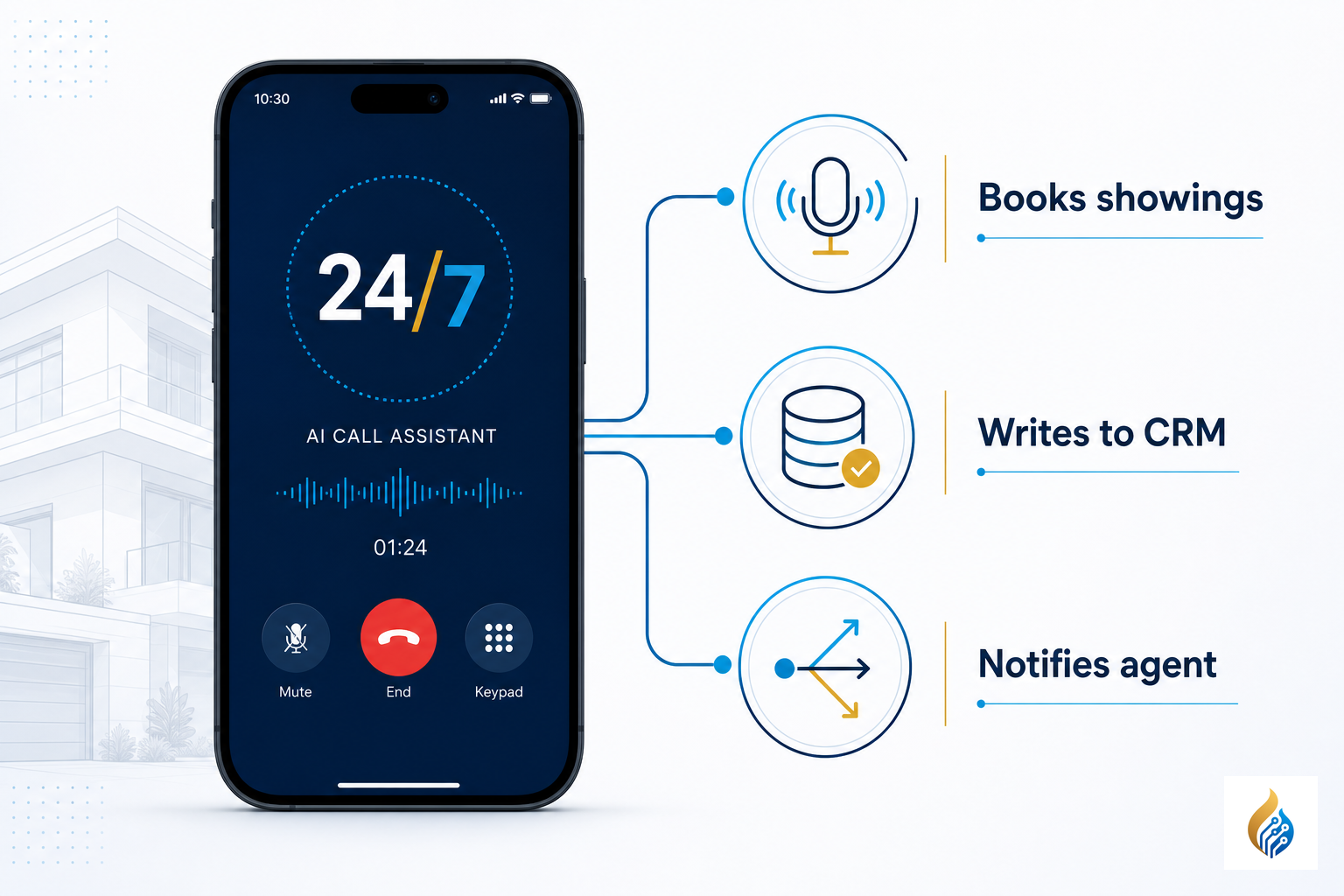
A real estate answering service is a 24/7 call-handling system that picks up buyer/seller inquiries, qualifies leads, and routes urgent calls to the agent. The problem is that most agents are still relying on voicemails or delayed callbacks, creating a 47-917 minute response gap that's costing them 30-60% of their after-hours leads. The fix isn't buying more software — it's installing a done-for-you system that answers calls, writes to your CRM, and notifies you within 60 seconds.
What does a real estate answering service actually do?
An answering service for real estate handles the calls you can't take: after-hours inquiries, overflow during showings, and weekend buyer requests. The difference between a traditional live receptionist and an AI receptionist is that the AI can handle unlimited simultaneous calls, never needs breaks, and integrates directly with your existing tools.
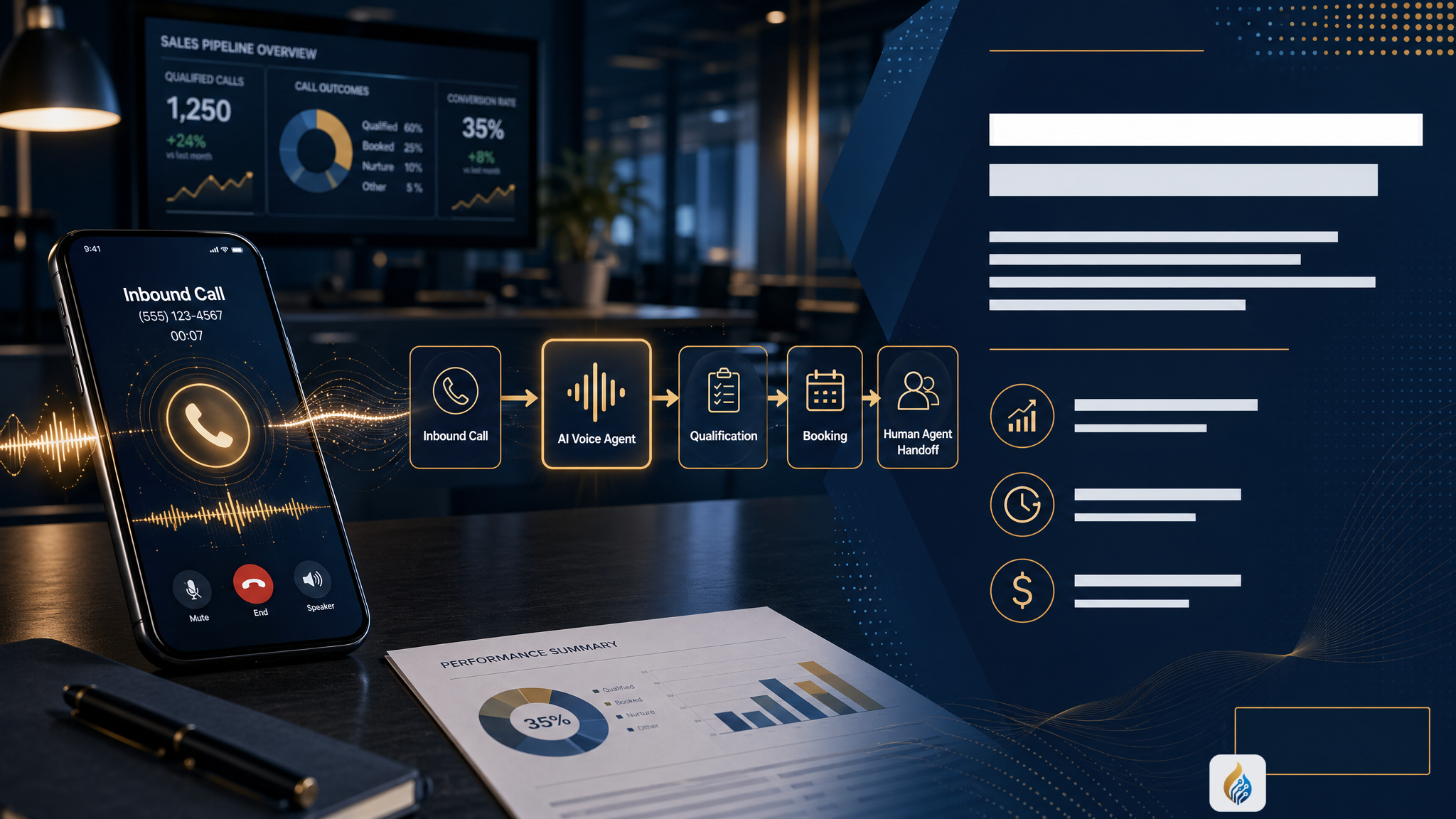
The core function is simple: a lead calls at 8:47 PM on a Saturday, the system answers in under 10 seconds, qualifies the lead's intent (buyer, seller, or general inquiry), and either books an appointment or routes the urgent call to the on-duty agent. The result is that you wake up to qualified leads already scheduled, not voicemails to return.
The 47-917 minute response-time gap (and what it costs you)
Industry data is brutal: a 30-minute response time is 21x more effective than a 5-hour response when converting leads to qualified appointments. The average agent checks messages every few hours during the day, and many don't check email or voicemail until the next morning.
For a solo agent doing $5M in annual GCI, a 30% lead-loss rate from slow response translates to roughly $45K-$80K in lost opportunity every year. The cost of missed calls isn't theoretical — it's measurable in commissions you never earned. The gap isn't just time; it's the difference between being first to speak to a motivated buyer or being the fourth agent they call.
How an AI receptionist books showings while you sleep
The AI receptionist works by combining three components: a voice layer that handles natural conversation, a CRM integration that writes lead details to your system, and a routing layer that notifies the right agent based on your rules.
When a call comes in after hours, the AI answers with a branded greeting, asks qualifying questions (budget range, timeline, neighborhood preference), and either schedules directly into the agent's calendar or flags the lead as high-priority for immediate callback. The agent gets a text summary within 60 seconds — name, number, intent, and urgency level — without having to listen to voicemails or log into multiple systems.
The 3-component stack: voice + CRM + lead routing
The magic isn't the voice AI alone — it's the handoff. Here's how the three pieces work together:
• Voice layer — handles the actual conversation, qualifies the lead, and captures contact details
• CRM write-back — pushes the lead data into your existing system with tags, notes, and source attribution
• Lead routing — sends instant notifications to the right agent based on zip code, property type, or availability
Remove any one of these and the system breaks. A voice-only solution leaves you manually copying data. A CRM-only solution misses the real-time conversation. Routing without context means agents get pings without knowing why.
The 4 ways teams get burned (and how done-for-you fixes each)
Most agents who try AI receptionists hit four predictable failure modes:
Robotic voice — callers hang up because they know it's a bot. Done-for-you systems use voice models trained on natural conversation patterns, not robotic scripts.
Missed handoffs — the AI captures the lead but the agent never gets notified. Done-for-you installs include redundant notification paths and escalation rules.
No CRM write-back — the lead exists in the answering service dashboard but nowhere else. Done-for-you means the data flows to the tools you already use.
Bill shock from overages — per-minute pricing that spikes when marketing campaigns drive call volume. Done-for-you pricing is predictable, not usage-based.
Map-Build-Reclaim: how Aurumflare scopes the install
We Map your current call-routing workflow — which calls are missed, where leads go cold, which hours the team isn't available. We Build the integrated system around the tools you already use. Then we Reclaim the after-hours hours you were losing to missed calls.
The install takes 2-3 weeks, not 6 months. You don't learn the tool; we hand you a working system with your branding, your routing rules, and your CRM already connected.
What a done-for-you install costs (and what the ROI math looks like)
We don't quote specific pricing because every install is scoped to the team's size and complexity. What we can say: the cost is typically less than hiring a part-time ISA, and the break-even happens within the first month if the system captures even a single additional listing appointment per month.
For context: a live human answering service runs $400-$800 per month for basic coverage. The hidden cost is that they can't scale to handle 10 simultaneous calls during a marketing push, and they rarely integrate with your CRM. An AI receptionist handles unlimited volume and writes data directly to your system — the integration is where the ROI lives.
If your team is losing after-hours leads, we can Map the call-routing workflow and show you exactly what a done-for-you install would look like. Book a free technical assessment → aurumflare.com/contact.
See how AI automation could work for your business
Book a free 30-minute assessment — no pitch, just answers.
Book a Free Assessment