AI Workflows for Real Estate Teams: The 3 Systems That Separate Top Producers From the Rest
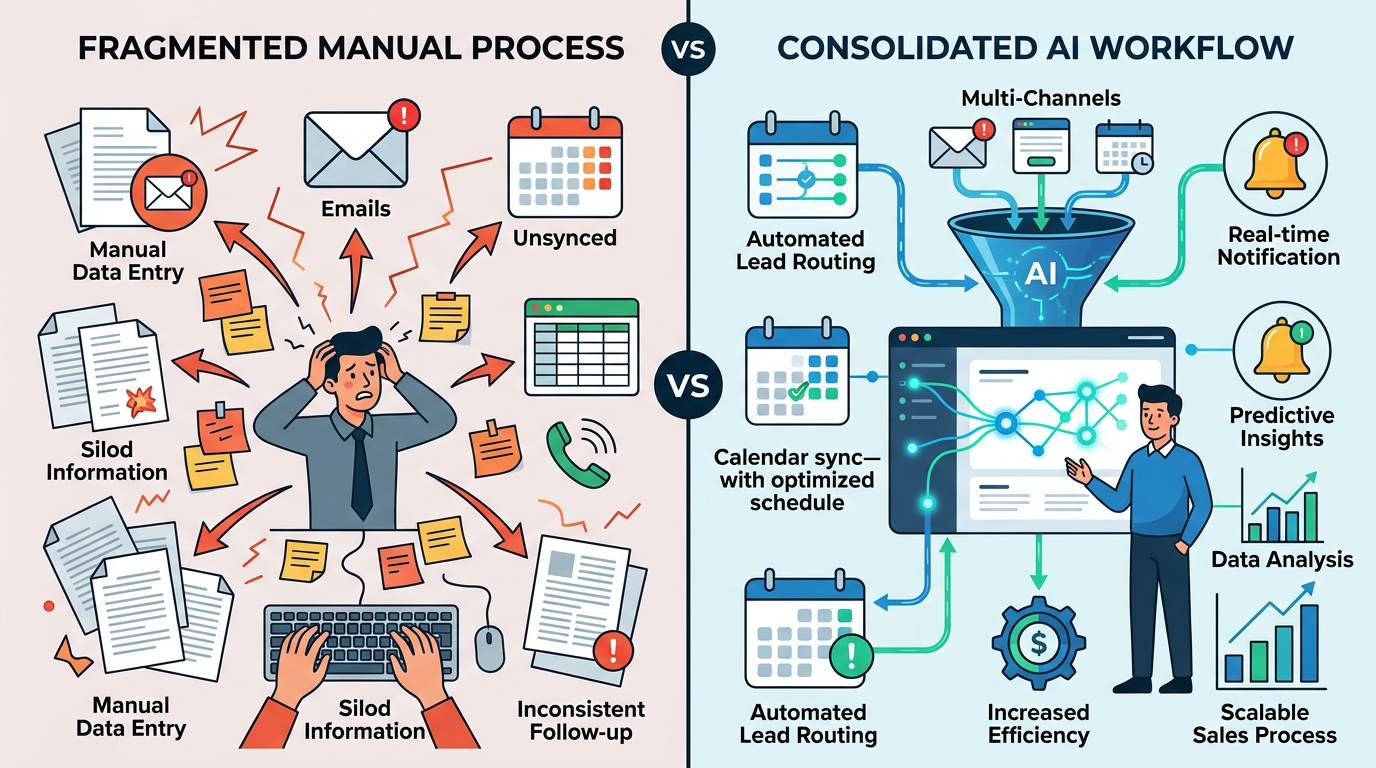
Real estate teams are drowning in tools. You've got your CRM, your IDX feed, your showing scheduler, your SMS platform, your email marketing system, your transaction management software. Each one does its job. None of them talk to each other.
The result? Your agents spend hours every week copying data between systems, chasing down listing updates, and manually triggering follow-up sequences. For a ten-agent team averaging $100K in production per agent, every hour spent on admin instead of selling costs $25–$40 in lost commission. That adds up fast.
Why your real estate team's workflow is the problem, not your tools
Most brokerages we talk to already own great software. The issue isn't the quality of individual tools. It's the handoffs between them. A lead comes in from Zillow. Someone has to manually enter it into the CRM. Then someone else has to add it to the follow-up sequence. Then an agent needs to be notified. Then the showing needs to be scheduled.
Community data shows agents take anywhere from 47 minutes to over 15 hours to respond to new leads without automation. By then, your prospect has already talked to three other agents.
When Douglas Elliman launched Elius in June 2026, it signaled something important: vertical AI for real estate is moving from experiment to infrastructure. The teams that adapt now will have a structural advantage. The ones that wait will be playing catch-up for years.
The 3 workflows we automate for real estate teams
We focus on three specific workflows that drive the majority of operational drag in real estate teams:
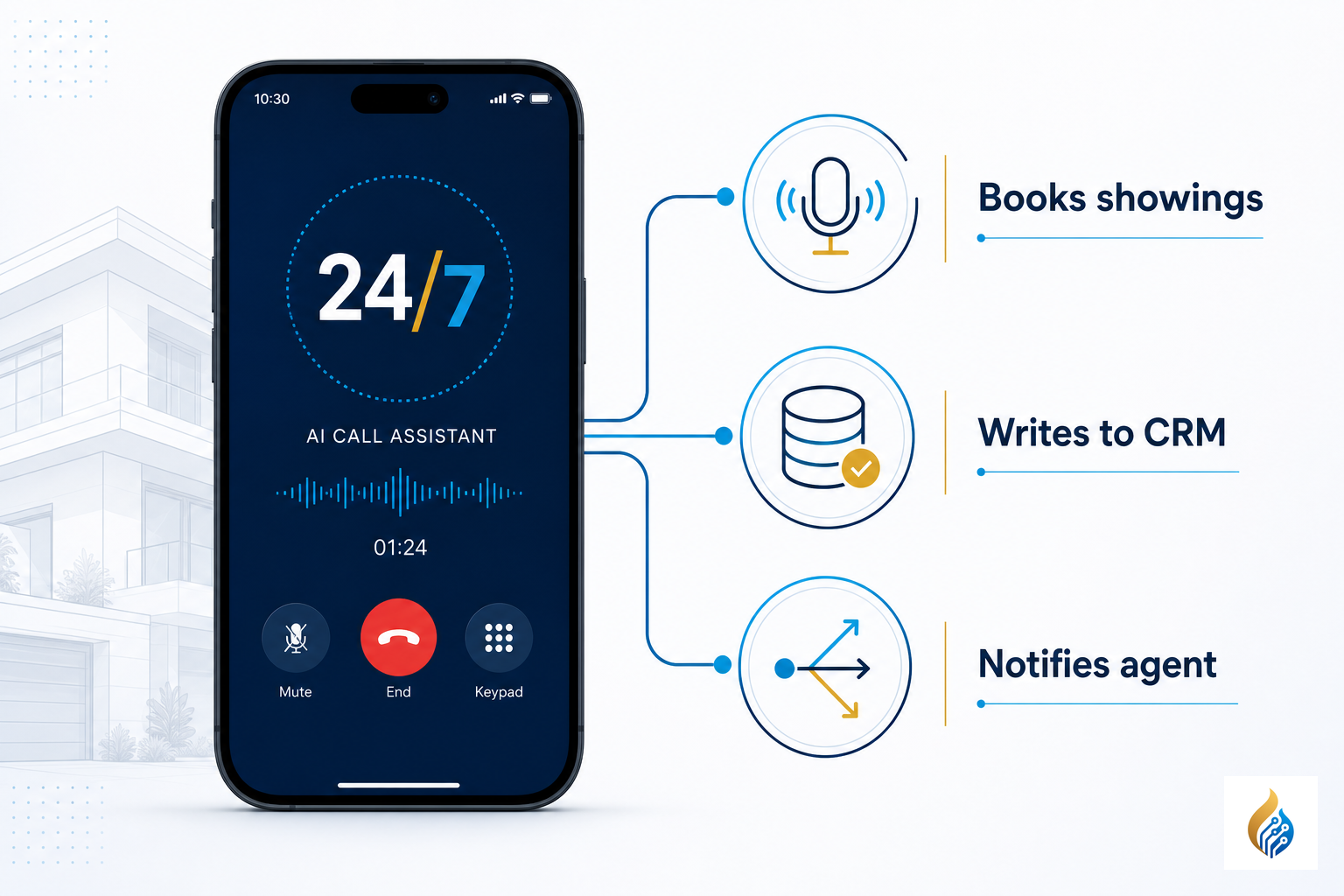
Lead ingestion to CRM entry to follow-up sequence. When a new lead arrives from any source, it should automatically populate your CRM, trigger the appropriate nurture sequence, and notify the assigned agent. No manual data entry. No dropped leads.
Listing update to CRM to agent notification. When a listing status changes, your entire team should know immediately. Price drops, pending status, closing dates, all of it should flow automatically to the right people without someone babysitting the MLS feed.
Contract stage to document collection to closing checklist. Transaction management is where deals die silently. Automated document requests, deadline tracking, and milestone notifications keep deals moving and clients informed.
These three workflows alone typically reclaim 15–25 hours per week for a ten-agent team. That's time your agents can spend on revenue-generating activities instead of administrative handoffs.
What "done for you" actually means vs. DIY automation
There are plenty of automation platforms available. You could spend weekends learning them, debugging connections, and rebuilding workflows every time your software changes. Many teams try this route. Most abandon it after a few months because it becomes another job on top of their actual job.
Done-for-you automation is different. We handle the mapping, the building, and the maintenance. When your CRM updates its API, we update your workflows. When you add a new tool to your stack, we integrate it. When something breaks at 10 PM on a Saturday, we fix it.
The teams generating $3K–$15K monthly in automation value aren't selling tools. They're selling the hours back to their agents.
How to know if your team is ready for AI workflow automation
Not every team is ready for automation. Here are the signals that indicate you're in a position to benefit:
Volume threshold. If you're handling fewer than twenty transactions per year, automation may not pencil out. But if you're managing fifty-plus deals annually, manual workflows are costing you real money.
Existing tool stack. Teams that already use a CRM, transaction management system, and marketing automation see faster returns than teams starting from scratch.
Quantified admin burden. If you can't put a number on how many hours your team spends on manual tasks, you won't know if automation is working. We help teams calculate this before we start.
What happens in the first 30 days
Our process follows three phases: Map, Build, Reclaim. In the first week, we map your current workflows, identifying every handoff, manual entry point, and delay in your process. We document what tools you use, how data flows between them, and where the friction lives.
In weeks two and three, we build the connections between your existing tools. We don't rip and replace what works. We automate the handoffs that slow you down. Your agents keep using the software they know. The difference is that now it works together.
By day thirty, your team reclaims the hours they were losing to manual work. Most teams see 60–80% of their administrative workflows fully automated within the first month.
The real estate teams winning in this market aren't the ones with the most software. They're the ones whose software actually works together. If you're ready to stop manually pushing data between systems and start focusing on what moves the needle, let's talk.
See how AI automation could work for your business
Book a free 30-minute assessment — no pitch, just answers.
Book a Free Assessment